
Industrial Electric Heater Manufacturers
High-Performance Industrial Heating Solutions in India
Selcon Heaters delivers dependable industrial electric heaters designed to support efficient and precise heat management across a wide range of applications in India. With a strong focus on quality, performance, and engineering reliability, the company provides heating solutions that help industries maintain consistent operating temperatures, improve process efficiency, and support long-term equipment performance. Their commitment to dependable products and customer-focused service makes Selcon Heaters a trusted choice for industrial heating requirements.
Why Choose Selcon Heaters for Industrial Heating Applications?
Electric industrial heaters provide precise, efficient, and reliable heating for a wide range of manufacturing and processing applications. Compared with conventional heating methods, they offer better temperature control, faster heat response, and the potential to reduce energy usage and operating costs.
Selcon Heaters manufactures industrial heating solutions designed for consistent performance in demanding environments. Built with durable materials and application-focused engineering, these heaters can withstand continuous industrial use while delivering dependable heat output, improved process efficiency, and long-term operational value.
Versatile Industrial Heating Solutions for Multiple Sectors
Selcon Heaters provides reliable electric industrial heating solutions for a wide range of applications across manufacturing, oil and gas, food processing, chemical production, and other industrial sectors. Designed to deliver consistent and controllable heat, these heaters help maintain equipment temperatures, improve process stability, and support efficient production.
In manufacturing environments, Selcon Heaters can be used for drying, curing, heat treatment, and temperature maintenance. In chemical processing, they help maintain the precise temperatures required for controlled reactions, improved product consistency, and higher process efficiency. Their adaptable design makes them suitable for demanding operating conditions where dependable heat management is essential.
By combining durable construction with efficient heating performance, Selcon Heaters supports reliable industrial operations while helping businesses manage energy consumption and maintain consistent output quality.
Types of Industrial Electric Heaters We Manufacture
Industrial electric heaters are available in different designs to meet the specific heating requirements of various processes and equipment. Each type is engineered for reliable heat transfer, efficient performance, and consistent temperature control in demanding industrial environments.
Our range of industrial electric heaters includes:
- Air Heaters: Designed to heat and circulate air in drying, ventilation, and process-heating applications.
- Oil Immersion Heaters: Used for efficiently heating oils, lubricants, and other liquid-based media in tanks and industrial systems.
- Cast-In Heaters: Custom-built heating elements cast into metal components to provide uniform heat distribution and enhanced durability.
These heating solutions can be selected and configured according to the application, operating temperature, equipment design, and performance requirements.
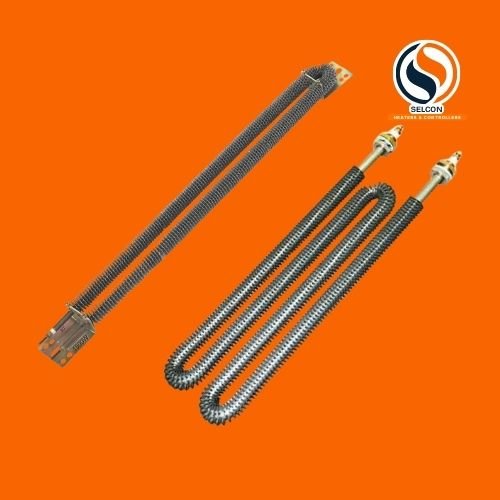
Air Heater
Understanding Air Heating Elements and Their Applications
Air heating elements are essential components used to generate and regulate heat in residential, commercial, and industrial systems. They convert electrical energy into controlled thermal energy, warming the air as it moves through ducts, chambers, or enclosed spaces.
By providing consistent and adjustable heat, these elements support applications such as space heating, air-handling equipment, drying systems, ovens, furnaces, and industrial process heating. Their efficient operation helps maintain comfortable conditions, stable process temperatures, and reliable system performance.
How Air Heating Elements Generate and Distribute Heat
Air heating elements work by passing an electric current through a resistive material. As the current encounters resistance, electrical energy is converted into heat. This thermal energy is then transferred to the surrounding air, creating a steady and controlled flow of warm air.
Different designs, including coiled and tubular heating elements, are engineered to improve heat transfer, airflow, and overall operating efficiency. Their construction and configuration can be adapted to suit applications such as air heaters, drying systems, ovens, furnaces, and industrial process equipment.
Versatile Applications of Air Heating Elements
Air heating elements are used across residential, commercial, and industrial environments to provide dependable and controlled heat. In homes and commercial buildings, they are commonly found in electric furnaces, baseboard heaters, air-handling units, and portable space heaters.
In industrial settings, air heating elements support processes such as drying, curing, heat treatment, ventilation, and material processing. Their adaptable design allows them to be configured for different airflow rates, operating temperatures, and equipment requirements. By delivering consistent heat distribution and reliable temperature control, air heating elements help improve process efficiency and overall system performance.
Selecting the right air heating element depends on factors such as the application, required temperature, airflow conditions, installation space, and operating environment.
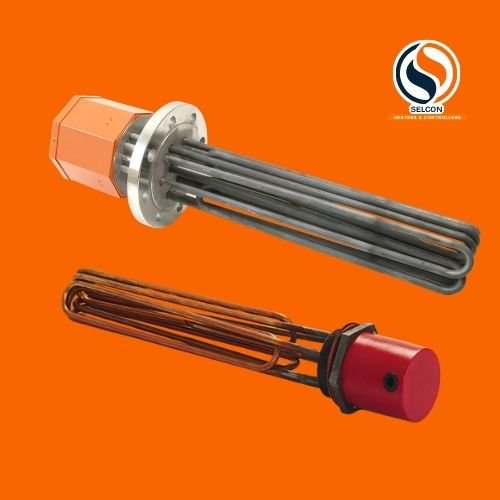
Oil Immersion Heater
Understanding Oil Immersion Heating Elements
An oil immersion heating element is designed to heat oil and other compatible fluids efficiently and uniformly. It is commonly used in tanks, reservoirs, processing equipment, and industrial systems where stable temperature control is essential.
The heating element is typically constructed with a durable metal sheath containing a resistive heating coil. When immersed in oil, it transfers heat directly to the surrounding fluid, promoting even temperature distribution and reducing the risk of localized overheating. This design supports reliable performance in applications that require consistent heat, efficient operation, and precise thermal management
How Oil Immersion Heaters Transfer and Control Heat
Oil immersion heating elements operate by converting electrical energy into heat through a resistive heating coil. When the element is immersed in oil, the generated heat is transferred directly to the surrounding fluid. The heated oil then circulates through the system by convection, helping distribute thermal energy evenly and maintain a stable operating temperature.
This method provides controlled and consistent heating for applications that require uniform temperature management, including industrial tanks, heat-transfer systems, laboratory equipment, thermal processing units, and selected food-processing applications. Proper heater selection depends on the type of oil, required temperature, tank design, and operating conditions.
Industrial Applications and Benefits of Oil Immersion Heating Elements
Oil immersion heating elements are used in a variety of applications across manufacturing, chemical processing, food production, laboratory systems, and other industries that require stable and uniform temperature control. By transferring heat directly to the surrounding oil, these elements support efficient thermal distribution while minimising heat loss.
Their ability to maintain consistent temperatures over extended operating periods makes them suitable for demanding heating processes. Oil also acts as an effective heat-transfer medium, helping reduce hot spots, limit sudden temperature fluctuations, and protect equipment from overheating. As a result, oil immersion heating elements offer dependable performance, improved energy utilisation, and enhanced process reliability.
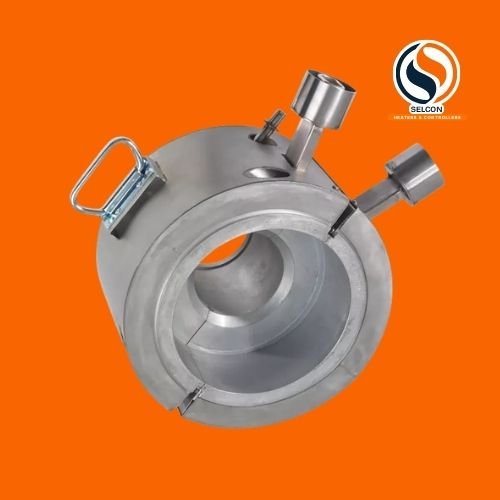
Cast In Heater
Understanding Cast-In Heating Elements
Cast-in heating elements are industrial heating components designed to provide efficient, uniform, and reliable heat transfer. During manufacturing, the heating element is embedded directly into materials such as aluminium, brass, steel, or other cast alloys. This integrated construction creates close contact between the heater and the heated surface, improving thermal conductivity and reducing heat loss.
Cast-in heaters are commonly used for moulds, dies, sealing equipment, plastic-processing machinery, hot plates, tanks, and other industrial systems that require precise and consistent temperature control. Their robust construction allows them to withstand demanding operating conditions while supporting long service life and dependable performance.
Key Benefits of Cast-In Heating Elements
Cast-in heating elements offer reliable and uniform heat distribution across the surface of the equipment or component in which they are embedded. This consistent heating is essential for applications that require precise temperature control, including manufacturing, plastic processing, mould heating, die casting, and chemical processing.
Because the heating element is integrated directly into a metal or other suitable material, it maintains close contact with the heated surface and transfers heat efficiently. This construction also helps protect the element from impact, vibration, contamination, and other external damage. As a result, cast-in heaters provide improved durability, reduced heat loss, stable operating temperatures, and dependable performance in demanding industrial environments.
Industrial Applications of Cast-In Heating Elements
Cast-in heating elements are widely used across industries that require reliable, uniform, and precisely controlled surface heating. In plastics processing, they help maintain the required temperature for moulds, dies, extruders, and other equipment used to melt and shape polymer materials.
In food-processing applications, cast-in heaters provide consistent heat for cooking plates, sealing equipment, warming surfaces, and processing machinery. In metalworking, they support controlled heating in furnaces, dies, moulds, and other industrial equipment.
Their durable construction, efficient heat transfer, and adaptable design make cast-in heating elements a dependable solution for demanding manufacturing and processing environments.